Get Started
A comprehensive guide to help you navigate your global remote job search.
The website features a continent selector to help you find job platforms specific to your desired region.
- Worldwide -> main platforms around the world
- America
- Europe
- Africa
- Asia
- Oceania
- Antarctica
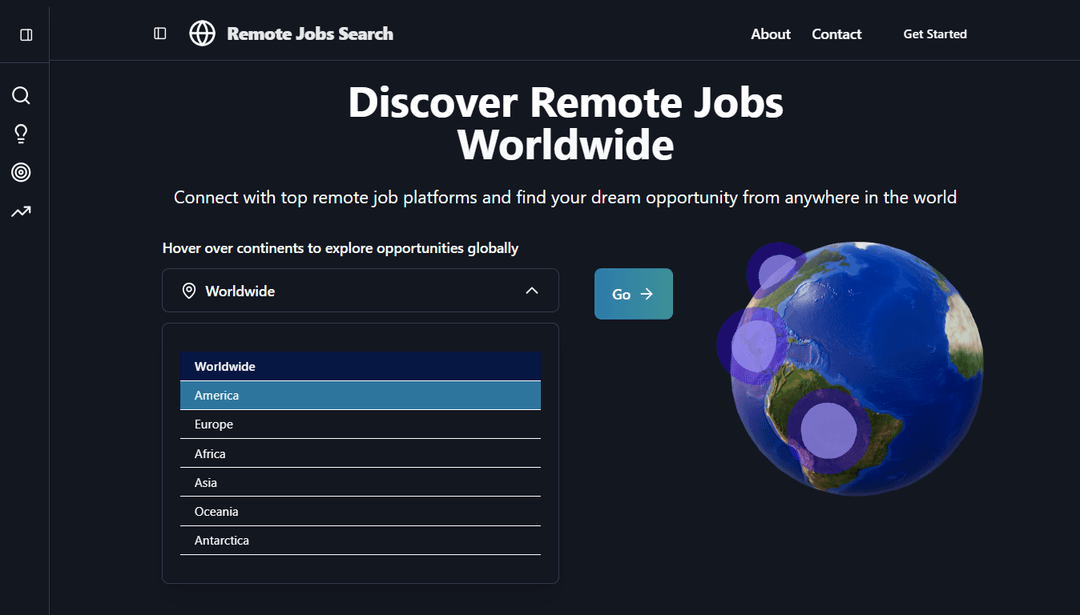
Each continent page details remote work sites. America and Asia, the two largest continents, have regional divisions due to cultural and political differences. When selecting these continents, you will first choose a specific region before accessing the job card details.
Below, you'll find key strategies and real-world concepts to consider in your remote search. Be conscious of the future consequences and legal complexities involved.
- Geo-blocking
- Strategy Country Platform Search
- Virtual Private Network (VPN)
- Warnings
Note: This section is purely informational to provide a conscious guide path. Proceeding with any tactics is at your own risk, and you must be prepared to face the legal and professional consequences in the future.
Geo-blocking
Geo-blocking is a technology used to restrict access to internet content based on the user's geographical location, determined primarily by their IP address. It is commonly employed by media distributors and e-commerce sites to enforce copyright, licensing agreements, and territorial distribution laws. This ensures content is only available in specific regions where the rights have been legally secured.
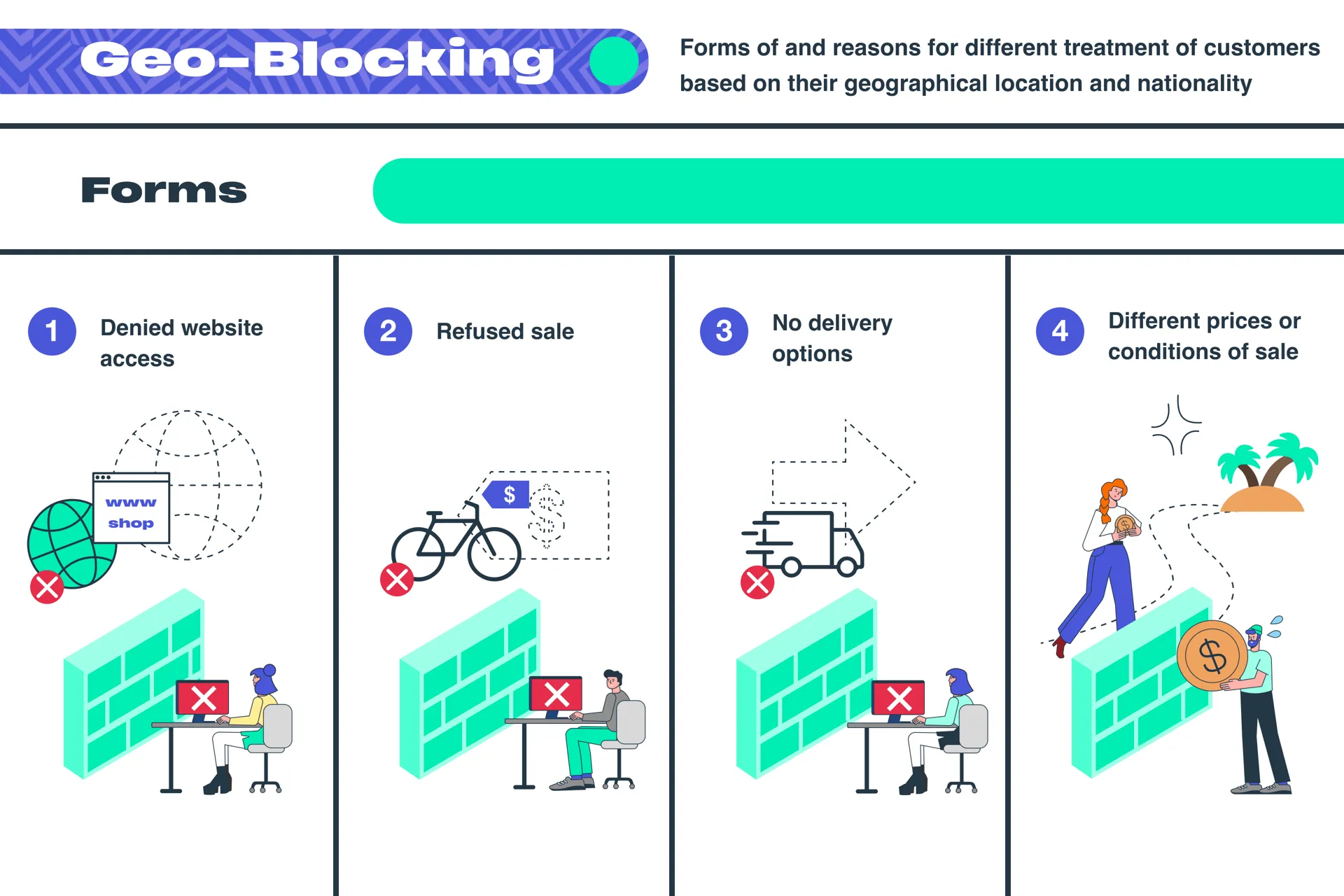
On remote job platforms, geo-blocking can significantly restrict your access to positions. This often happens because employers need to comply with local labor laws, tax regulations, or hiring limitations in specific countries.
This location-based filtering means many remote job opportunities are hidden or appear as content tailored only to your current geography, significantly limiting your global job search.
To potentially overcome these barriers and conduct a deeper search, two main strategies are discussed: Platform Language Strategy and the use of a Virtual Private Network (VPN).
Strategy: Platform Language Search
This strategy involves intentionally searching on a platform's version that is native to the country or region where you wish to find remote work.
Job platforms often limit the content displayed based on the user's language setting or IP (the adapted language version). By switching to a native language version (e.g., German for jobs in Germany), you can potentially unlock a broader pool of job listings that are typically geo-blocked from international views.
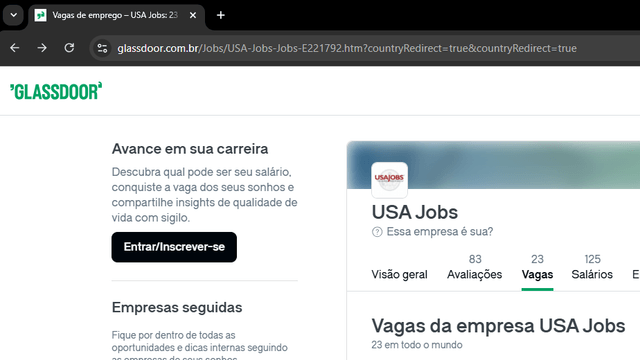
Adapted Language Version (Limited)
Content is filtered and limited based on your location/language preference.
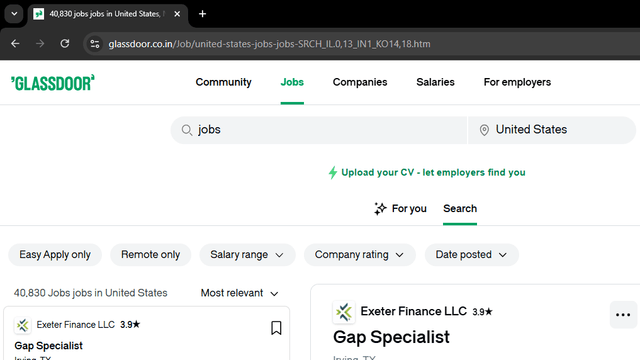
Native Language Version (Expanded)
Content shows jobs as if you were searching from within that region, potentially revealing more listings.
Hint: always search the positions on the platform language you want to work on
Based on your cookies and preferences (you save without know about cookies), the browse saves settings that, even searching for native links, it will redirects you to the adapted platform region, so, be sure to always clear your cookies settings, it may be use to steal data without knowing it.
If you are from the platform's native country, this is a natural advantage. If you are not, you will need to perform a more intensive and strategic search using the platform's native language and regional domain to see the full scope of available positions.
Virtual Private Network (VPN)
A Virtual Private Network (VPN) encrypts your internet connection and masks your true IP address, routing your traffic through a server in a chosen geographical location.
VPN and Geo-blocking
For job searching, a VPN is a primary method for bypassing geo-blocking. By connecting to a server in a different country (e.g., in Europe), the job platform sees the IP address of that VPN server, making it appear as though you are searching from that region.
This allows you to access content and job listings that are normally restricted to users in that specific geographic area, effectively giving you the content experience of a user located in that region.
The purpose of this site is to introduce the most known remote job platforms. If you choose to use a VPN, you should conduct your own thorough research into reputable services and their legal implications.
Critical Warnings and Consequences
Employing aggressive search tactics comes with significant risks. It is vital to know the potential consequences you may face before proceeding:
- Legal and Policy Violations: Different countries and platforms have strict laws and Terms of Service (ToS). Using methods like a VPN to bypass geo-restrictions may violate a platform's policies, leading to account suspension or permanent ban.
- Tax and Labor Compliance: The company you apply to may only be legally able to hire employees residing within certain regions due to tax, payroll, and labor law compliance. Lying about your location during the application or onboarding process is a severe ethical and legal issue.
- Information Disclosure: Even when using tactics to view content, when you create an account or apply for a job, you must provide your real personal information. This data will reveal your actual location, and the platform will use it to re-apply geo-filtering to your job feed. But this information will help you a lot with your search
- Future Consequences: Falsifying your location or identity to obtain a job can result in immediate termination, legal action, and potential damage to your professional reputation.
Proceed with extreme caution. Transparency and compliance with hiring laws are the safest path for your career.